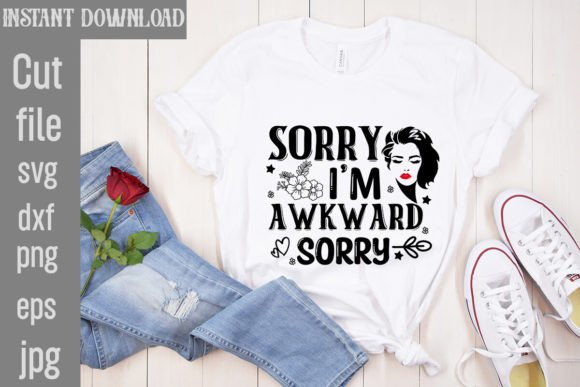
I Don’t Know What Would Do Without SVG Graphics
As a graphic designer who’s built brand identities for over a dozen handmade businesses—from ceramic studios to indie coffee roasters—I opened I Don’t Know What Would Do Without SVG expecting playful charm. What I found was something more: a tightly crafted, emotionally resonant design asset that lands somewhere between nostalgic warmth and modern wit. It’s not just a phrase rendered in type; it’s a visual tone-setter—soft-edged yet confident, casual but intentional. The rhythm of the lettering, the subtle weight shifts, and the gentle irregularity in spacing suggest hand-drawn authenticity without sacrificing scalability or clarity. That balance is rare—and exactly why this asset earned my attention for a real client project: a spring launch for a small-batch tea brand with a cozy, community-first voice.
A Mood That Fits Before It Fits the Brief
This isn’t a neutral placeholder—it carries mood like a well-curated color palette. I Don’t Know What Would Do Without SVG evokes comfort, reliability, and quiet joy—the kind you feel sipping your first cup on a slow Sunday. Visually, it leans into organic modern design: rounded terminals, open counters, and generous letter spacing that breathe on both screen and print. It reads as friendly but never childish, relaxed but never sloppy. For clients whose audiences value authenticity over polish—think Etsy sellers, local event coordinators, or wellness bloggers—it reinforces brand personality before a single word of copy is read.
Where It Shines in Real Client Work
In the tea brand project, we deployed I Don’t Know What Would Do Without SVG across three key touchpoints: product mockups (on reusable cotton tea bags and matte-finish tins), social media graphics (Instagram carousels and Pinterest pins), and printable thank-you cards for first-time subscribers. Each time, it performed exceptionally—not as a standalone logo, but as a supporting brand element that elevated cohesion.
- T-shirt design & merchandise: Printed cleanly on heather grey tees using direct-to-garment, it held detail at 10” width and remained legible even when scaled down to 4” on pocket embroidery mockups.
- Packaging design: Used as a secondary typographic accent on tea tin labels—paired with a clean sans serif for ingredient lists—its warmth softened the clinical feel of nutritional info without undermining professionalism.
- Social media graphics: Layered over soft-focus botanical backgrounds in Canva templates, its SVG vector format allowed effortless resizing and color swaps to match seasonal palettes (sage green → terracotta → oat milk beige).
- Cricut project & printable design: Imported natively into Cricut Design Space with no pixelation; cut cleanly on vinyl and iron-on transfers. Also worked beautifully as a focal point in downloadable wall art bundles for the brand’s digital product line.
Smart Placement, Not Just Pretty Placement
This asset thrives where personality matters most: hero sections of Shopify product pages, invitation suites for intimate workshops, bumper stickers for local markets, and sublimation designs for mugs sold at craft fairs. Its strength lies in context—not isolation. Use it as a decorative anchor in a layout dominated by whitespace, or repeat it subtly as a border motif on packaging flaps. It’s especially effective in themed collections (e.g., “Morning Ritual” merch bundles) or campaign visuals tied to routines, habits, or daily joys.
Where to Proceed with Intention
It’s not universal. Avoid placing I Don’t Know What Would Do Without SVG in ultra-minimalist branding systems—think law firms or fintech startups—where typographic restraint is non-negotiable. It can overwhelm small UI elements (like app icons or favicons) or compete in crowded layouts with dense body copy. On low-contrast backgrounds (e.g., light grey text on off-white), test readability rigorously. And while it pairs beautifully with handwritten and script fonts, it clashes with rigid geometric sans serifs unless carefully balanced with ample negative space.
Designer Notes You’ll Actually Use
Before clearing I Don’t Know What Would Do Without SVG for client use, I ran these checks:
- Test black-and-white conversion: Confirmed it retains character in monochrome—critical for embroidery, laser engraving, and newspaper ads.
- Check contrast ratios: Verified AA compliance on both light and dark backgrounds using browser dev tools.
- Preview at scale: Zoomed out to 25% to assess visual weight in large-format applications (e.g., banners, posters); zoomed in to 400% to inspect glyph integrity in SVG paths.
- Mockup realism: Placed it on 3+ real product mockups (tote bag, ceramic mug, notebook cover) to evaluate proportion, color harmony, and perceived quality.
- Print test: Ran a physical proof on uncoated stock—no ink bleed, crisp edges, no unintended transparency artifacts.
- File audit: Confirmed inclusion of true vector SVG (editable paths), high-res PNG (transparent background), and embedded font licensing if applicable. No rasterized text masquerading as vector.
- Font pairing test: Tried it alongside Montserrat, Playfair Display, Pacifico, and a custom brush script—only the last two created intentional contrast without visual tension.
- Licensing check: Verified commercial license covers print-on-demand, digital resale, and client deliverables—not just personal use.
Why It Earns a Spot in My Design Assets Toolkit
In a sea of generic quote-based clipart, I Don’t Know What Would Do Without SVG stands out because it doesn’t shout—it invites. It supports brand consistency not by dominating, but by reinforcing emotional continuity across touchpoints. For designers building for small business branding, editorial design, or creative marketplace listings, it’s more than a t-shirt design—it’s a versatile, mood-driven graphic design asset that does quiet heavy lifting. When paired thoughtfully, it adds trust through familiarity, engagement through warmth, and polish through precision. Just remember: its power lies in intention, not ubiquity. Use it where feeling matters—and let the rest of the system do the explaining.