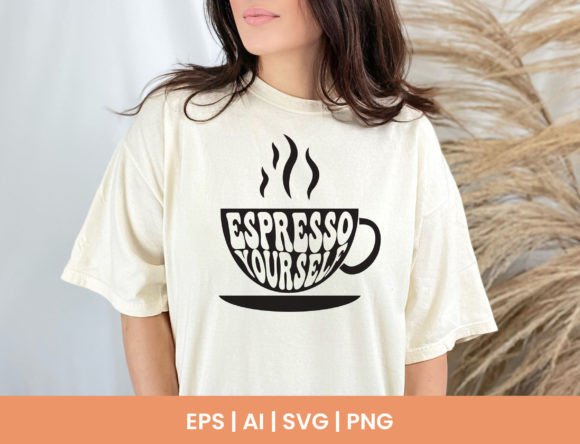
Espresso Yourself SVG PNG, Coffee Cup
As a designer who’s stitched over 300 custom embroidery projects — from boutique baby onesies to Etsy best-selling tote bags — I opened Espresso Yourself SVG PNG, Coffee Cup expecting charm. What I got was something more useful: a quietly confident, stitch-ready illustration that feels like it belongs on real things — not just screens.
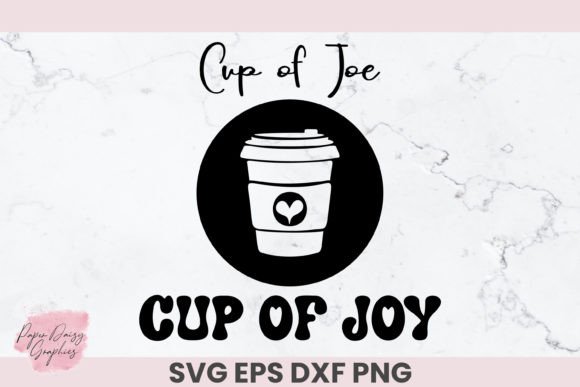
I tested it first on a medium-weight cotton canvas tote for a local café’s staff gift line. The design landed exactly where it should: friendly but not cutesy, detailed but not fussy. It’s a single coffee cup — steam curling upward, subtle shading in the ceramic curve, clean outline, and just enough interior detail to suggest warmth without demanding micro-stitching. No extra flourishes, no distracting background elements. That simplicity is its strength — especially when translating to thread.
Where This Design Shines (and Where It Doesn’t Pretend To)
Espresso Yourself SVG PNG, Coffee Cup isn’t built for dense fill-stitch landscapes or intricate monograms. It’s built for clarity, consistency, and quiet recognition. Think: embroidered sweatshirt cuffs, left-chest placements on aprons, centered front panels of tea towels, or minimalist patches sewn onto denim jackets. Its proportions scale cleanly — from 2.5” wide on a baby bib to 4.25” on a relaxed-fit crewneck — without losing legibility.
I ran it as a machine embroidery design on three fabric types: brushed cotton (for a holiday kitchen towel), midweight French terry (a unisex sweatshirt), and lightweight linen-blend (a boutique pillow cover). On all three, the satin stitch around the cup rim held crispness, and the steam element — a delicate running stitch curve — stayed distinct without fraying or skipping. No puckering. No need to over-stabilize, though I did use medium tear-away on the terry and cut-away on the linen for longevity.
It also works beautifully as an applique design. The clean vector edges (thanks to the included SVG and AI files) made cutting precise, and the shape nests well into curved seams — I placed one near the shoulder seam of a raglan sleeve with zero distortion.
Real-World Caution Zones
This isn’t a “throw-it-on-anything” file. It needs thoughtful placement. On stretchy fabrics like jersey knits, avoid placing it across high-movement zones (like the center chest of a fitted tee) unless you add light fusible stabilizer underneath — the cup’s smooth curves can distort under tension. On dark fabric, test your thread colors early: the original palette reads warm and creamy, but ecru or light tan thread can disappear on charcoal or navy unless you switch to oatmeal or soft caramel.
Don’t force it into tiny hoops. Below 2.75”, the steam line starts to compress, and the cup’s handle loses definition. For caps or curved surfaces, stick to 3”–3.5” max width — anything larger risks crowding the front panel or stretching the stitch layout unnaturally.
And while the PNG and SVG files are perfect for digital mockups or printable packaging labels, remember: those aren’t embroidery files. You’ll need to digitize the artwork yourself — or confirm the seller includes a pre-digitized embroidery file (DST, PES, etc.). The product description lists SVG, PNG, AI, and EPS — great for designers, but not plug-and-play for most embroidery machines without conversion.
What It Adds to Your Finished Product — Beyond Aesthetic
Customers don’t buy coffee cup graphics. They buy *feeling*: comfort, ritual, small joys. Espresso Yourself SVG PNG, Coffee Cup delivers that tone without irony or overload. On a personalized gift — say, a linen tea towel monogrammed with a name and this design — it reads handmade, intentional, and warm. Not mass-produced. Not generic.
For Etsy sellers and craft fair vendors, that matters. It elevates perceived value. A $28 embroidered towel with this design sells faster than one with a cluttered, overly detailed coffee motif — because buyers instantly “get it,” and trust the maker’s taste.
It also supports brand consistency. If your shop leans into slow living, cozy minimalism, or artisanal food culture, this design reinforces that voice across products — whether it’s stitched on a patch, printed on a sticker sheet, or used in a digital embroidery file preview.
Practical Designer Notes Before You Stitch
- Always test Espresso Yourself SVG PNG, Coffee Cup on scrap fabric first — especially if using textured weaves or blends.
- Check stitch density in your digitized version. Too dense = stiff fabric; too sparse = weak definition. Aim for balanced fill-stitch coverage in the cup body, lighter running stitch for steam.
- Confirm hoop size compatibility before finalizing placement — especially for curved garments or layered items like reversible aprons.
- Inspect corners and curves at 200% zoom in your embroidery software. Look for jagged nodes or unintended overlaps that could cause thread breaks.
- Run black-and-white mockups. Does the silhouette hold up? Does contrast pop on both light and dark backgrounds?
- Use appropriate stabilizer: tear-away for stable wovens, cut-away for knits or lightweight fabrics, and optional topping for napped textures like terry.
- Verify licensing terms before selling finished items or bundling as part of a commercial embroidery project — especially if reselling digital assets or offering embroidery services to clients.
In short: Espresso Yourself SVG PNG, Coffee Cup earns its place in your Crafts folder not because it’s flashy, but because it’s reliable. It’s the kind of Graphics asset that disappears into your product — then reappears, warmly and unmistakably, in your customer’s daily ritual.